
Advertise with Google Ads in 5 Simple Steps
1. Laying the Foundation
The process begins with setting up the essentials. You’ll create your account, enter your business name and website URL, and connect your Google Business Profile or YouTube channel to receive more tailored recommendations. At this stage, you’ll also set up your billing details. The good news is that you only pay when someone interacts with your ad, such as clicking on it or watching a video.
2. Defining the Architecture
Every campaign starts with one key question: What do you want to achieve? You’ll choose a primary goal—whether that’s generating sales, capturing leads, driving website traffic, or building brand awareness. From there, you’ll select the campaign type that best supports that goal, such as Search ads that appear in Google results, Performance Max campaigns that use AI across Google’s channels, or Video ads on YouTube.
3. Calibrating the Instruments
This step is all about fine-tuning your targeting and budget to reach the right audience.
-
Targeting: Use tools like the Google Keyword Planner to identify the search terms your audience is using, and narrow your reach by location, age, and interests.
-
Budget: For small businesses, a sensible starting point in 2025 is usually a daily budget between £10 and £50.
4. Crafting the Message
To encourage action, you’ll need strong, high-quality creative assets, including images, logos, and videos. For Search ads in particular, write clear and engaging headlines that align with your chosen keywords. Always include a strong call to action, such as “Buy Now,” “Sign Up,” or “Call Today.”
5. Activating and Refining
Once everything is set up and approved, your campaign goes live and begins learning over time. From day one, it’s crucial to have conversion tracking in place so you can see which ads are actually driving results. You can then use Smart Bidding, Google’s AI-powered optimisation tool, which analyses millions of signals in real time to adjust bids and help you get the most from your campaign.
Google Ads for small businesses is designed to be a precise, efficient machine that converts customer intent into action.
Rather than simply "shouting the loudest," it allows you to connect with potential customers at the exact moment they are searching for your specific solution in a saturated market.
By following a structured approach, small businesses can move beyond basic advertising and begin engineering predictable business outcomes and growth


Laying the foundation is the essential groundwork for your entire campaign and consists of the following steps:
• Initiate Setup: Visit the Google Ads homepage and select "Start Now".
• Provide Business Details: Enter your business name and website URL.
• Link Assets: Connect your Google Business Profile or YouTube channel to receive tailored recommendations for your account.
• Configure Billing: Enter your payment details; notably, you typically only incur costs when a user interacts with your ad through a click or a view.
Setting up your account correctly ensures the rest of your campaign architecture is built on a solid base.

Defining the Architecture, is the stage where you determine the strategy and structure of your campaign. You can complete this phase by following these simple steps:
• Ask the Core Question: You must first answer, "What is your primary business objective?" as this single goal determines how your entire campaign is built.
• Select One Primary Goal: Choose the objective that best matches your current needs:
◦ Sales: To drive purchases through your app or website.
◦ Leads: To encourage potential customers to share their information via sign-ups.
◦ Website Traffic: To bring high-quality, relevant users to your site.
◦ Brand Awareness: To build recognition by reaching a very broad audience.
• Match with a Campaign Type: Once your goal is set, select the right campaign format to achieve it, such as Search (text ads), Video (YouTube), or Performance Max (AI-powered across all channels),.
Defining a clear objective and campaign type ensures your advertising acts as a predictable engine for growth rather than just a simple expense,.

Calibrating the Instruments, is where you apply precision to your campaign through targeting and financial controls,. You can complete this phase with these simple steps:
• Perform Keyword Research: Use the Google Keyword Planner to discover the exact terms your potential audience is searching for.
• Define Your Audience: Narrow your reach by targeting users based on their location, age, interests, and any previous interactions they have had with your website.
• Establish Daily Control: Specify the exact daily amount you are willing to spend to maintain control over your finances.
• Set a Benchmark Budget: For small businesses in 2025, a recommended starting daily budget is typically between £10 and £50.
By using precise targeting and a controlled budget, you ensure your ads reach the right people without overspending

Crafting the Message, is the stage where you build the creative elements of your campaign to drive customer action. You can complete this phase by following these simple steps:
• Assemble High-Quality Assets: Upload professional images, logos, and videos that represent your business.
• Write Compelling Copy: For Search ads, create headlines and descriptions that resonate with your target keywords.
• Integrate a Clear Call to Action (CTA): Directly tell the user what to do next using strong, action-oriented language.
• Use Proven Phrases: Include clear instructions such as "Buy Now," "Sign Up," or "Call Today" to guide potential customers.
By crafting compelling ads with a clear call to action, you ensure your message effectively converts interest into results
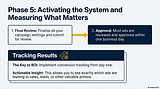
Activating & Refining, is the final stage where you launch your campaign and use data to ensure it becomes a predictable engine for growth. You can complete this phase with these simple steps:
• Perform a Final Review: Double-check all your campaign settings and submit them for review.
• Wait for Approval: Most ads are reviewed and approved within one business day, allowing your campaign to go live.
• Implement Conversion Tracking: Set up tracking from day one; this is the key to ROI as it shows exactly which ads lead to sales or leads.
• Leverage Smart Bidding: Use Google’s AI-powered tool to automatically adjust your bids in real-time, ensuring your budget is spent with maximum efficiency.
By launching, tracking, and refining your campaign, you move beyond simple advertising and begin engineering specific business outcomes.